


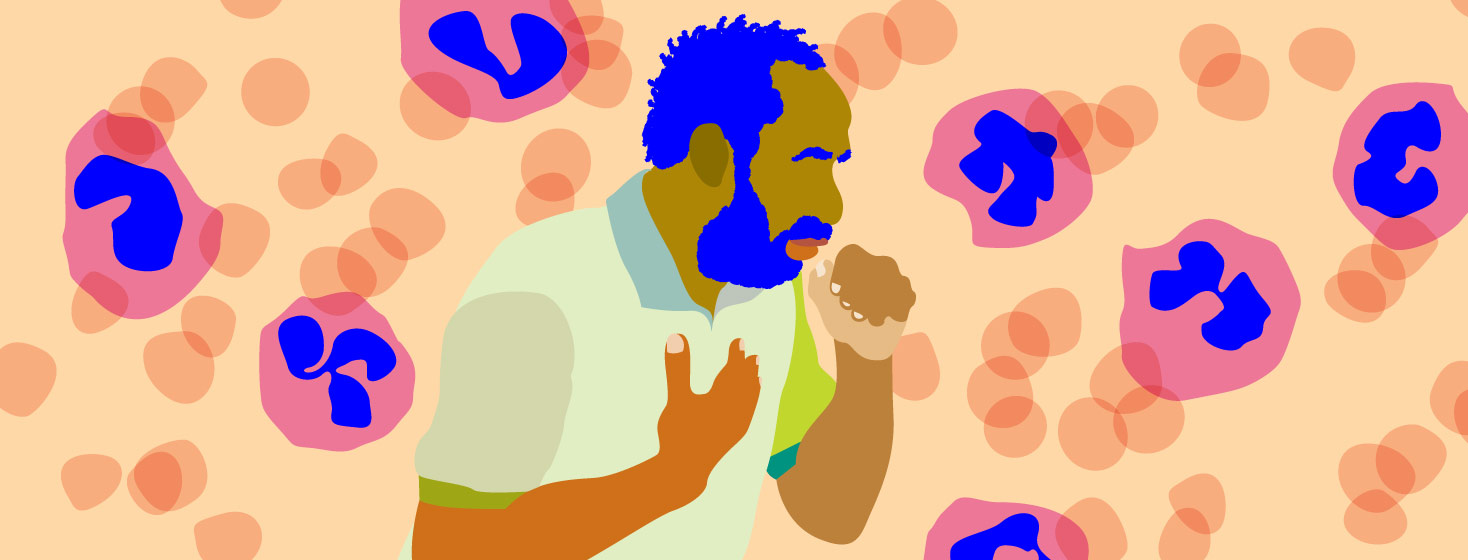
The Role of Eosinophils in Asthma: What To Know (Part 2)

This article begins where my last article, "Eosinophils And Asthma: What To Know (Part 1)" left off. You may benefit from reading that article and then returning to this one.
So, let's get back into explaining eosinophils. Here, we will explain how eosinophils are responsible for more aggressive asthma attacks. These attacks may be more severe and harder to treat. They may also be responsible for severe asthma, particularly eosinophilic asthma. Allow me to explain.
Eosinophils begin arriving in your airways 4-6 hours after exposure to the trigger. In our example, it's dust mites, although it can be any asthma trigger. Here, eosinophils release their contents, which are hundreds of tiny granules.
What do eosinophils do?
These granules are the culprits that do all the damage, per se.
Eosinophils cause inflammation during the asthma's late phase. You don't need to remember these names. There will be no test. I just want you to see how eosinophils work. This should help explain how eosinophils contribute to more aggressive asthma attacks and severe asthma. Here are the contents inside eosinophils:
- Major basic protein (PRG2): It’s a protein that helps cause mast cell degranulation. This means it makes mast cells release their own chemicals. It’s meant to be a response to invading parasites.1
- Eosinophil cationic protein (ECP): It’s a protein that also causes mast cell degranulation and inflammation of cells lining airways. Degranulation is a fancy word that means these cells release chemicals, which may include even more irritating mediators. So, in this way, cells can even cause their own damage.2
- Eosinophil-derived neurotoxin (EDN): It’s a protein. It has antiviral properties and attracts and stimulates the activation of other immune cells, which recruit more Th2 cells, which release even more irritating mediators.3
- Eosinophil peroxidase (EPX): It’s a protein. It’s meant to disrupt the cellular walls of parasites, killing them.4 It causes gaps to develop in cellular walls, leading to blood vessel leakage and airway inflammation.5
- Leukotriene: Yes. These are released during the early phase. And here, even more are released. These guys cause inflammation of the upper and lower airways. They can cause both allergy and asthma symptoms. They can even cause bronchospasm and asthma attacks. A treatment method for blocking their effects is anti-leukotriene antagonists, such as Singulair.6
Eosinophils play a significant role in asthma
All allergic asthmatics have increased eosinophil levels in their sputum (mucus). But eosinophil levels tend to diminish and return to normal or near-normal levels between attacks.6

There are 3 ways eosinophil levels go down. These are the 3 ways that asthma attacks may end.
- Time: Sometimes, time alone will resolve asthma.
- Getting away from the trigger: Sometimes, just getting away from the trigger is all that is needed to end the attack. Sometimes, a combination of time and getting away will resolve asthma attacks.
- Medicine: There are lots of medicines used to reverse, and also to prevent, asthma attacks. Some are bronchodilators that open airways to end asthma attacks quickly. But sometimes more aggressive treatment is needed, and this is where corticosteroids come in handy.
Eosinophilic inflammation responds well to corticosteroids
This is because corticosteroids work to reduce eosinophil levels. I don't want to get into how this happens (not just yet). You should know that corticosteroids suppress eosinophil activity.
Systemic steroids help reverse asthma attacks, and inhaled corticosteroids (ICS) help prevent asthma attacks or make them less severe when they do occur. They suppress eosinophils and reduce their numbers. They prevent them from doing their job, which is causing aggressive airway inflammation.
This is why inhaled corticosteroids are now considered top-line medicines for helping allergic asthmatics obtain good asthma control.6
The exception to the rule
However, certain genetic variations may stimulate higher eosinophil levels and severe asthma. In such cases, eosinophil levels may stay elevated even between asthma episodes. This makes asthma that much tougher to control, even with corticosteroids. This often results in a diagnosis of severe asthma, perhaps including a diagnosis of eosinophilic asthma.6
In this case, your doctor may prescribe the highest ICS dose. If you still continue to have poorly controlled asthma, this is where biologics come in handy. Most biologics available for asthma today block the effects of IL-5 (Interleukin-5). They either bind IL-5 or its receptors. In either case, one of these biologics can prevent the late-phase asthma attack. These medicines have proven very helpful for severe asthmatics in achieving good asthma control. This is especially true if you have eosinophilic asthma, AERD, or Eosinophilic Granulomatosis Polyangitis.
What do eosinophils do? They cause persistent asthma
Eosinophils are the culprits responsible for more severe asthma attacks. This is because eosinophils may stick around for a long time. Therefore, they continue to release mediators for a long time. So, this is what makes late-phase asthma attacks more severe.
Now, most asthma attacks are completely reversible. This can be done with time, removal from the trigger, and/or treatment. For the more aggressive asthma attacks, systemic corticosteroids are helpful. But in a few people, eosinophil levels persist despite corticosteroid treatment. This is what leads to your more severe subgroups of asthma.
This is what causes persistent eosinophilic asthma. Here, eosinophil levels remain high even between attacks. In a sense, these asthmatics are continuously experiencing late-phase asthma symptoms. This asthma subgroup can still be treated. But it usually requires higher doses of inhaled corticosteroids. Sometimes treatment may require two or more asthma medicines.
Key takeaways
This article should answer the question, "What do eosinophils do?" You can see here how the presence of eosinophils can make asthma attacks more severe. They can even sometimes make asthma difficult to control. They can also cause severe asthma, such as eosinophilic asthma. The good news is that eosinophilic inflammation, no matter how severe, responds well to traditional asthma medicines.
Join the conversation